
Vibe Coding Meets Vibe Ops: Automating the Last Mile of Deployment
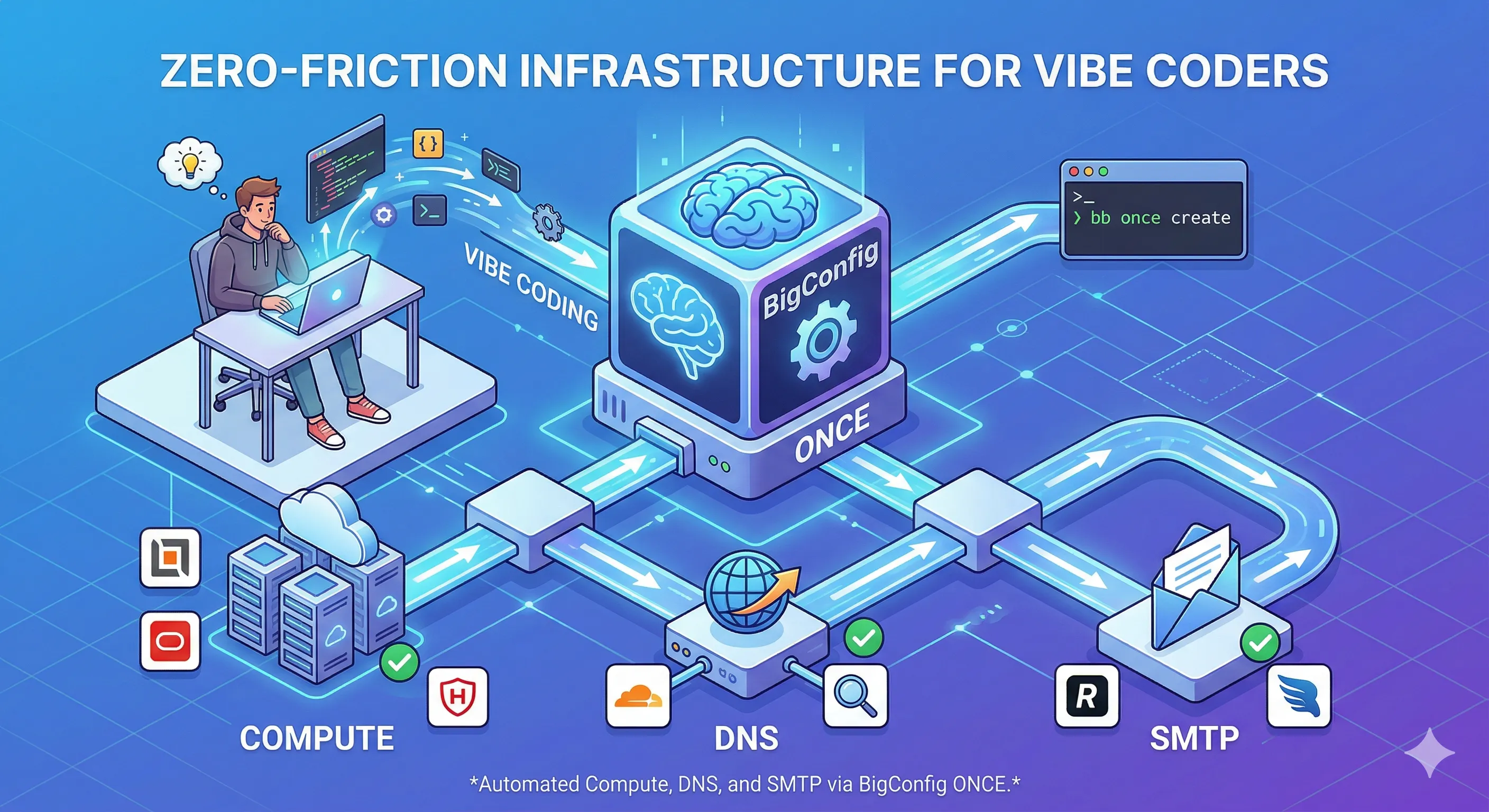

Vibe coding has made building web applications faster and more intuitive than ever, but the Ops side of the house hasn’t quite kept up. While 37signals’ ONCE simplified the deployment architecture for vibe coders, managing the underlying infrastructure—Compute, DNS, and SMTP—remains a fragmented, manual process.
Enter the BigConfig once : the missing link that automates the manual out of your deployment pipeline.
Zero-Friction Infrastructure
Section titled “Zero-Friction Infrastructure”BigConfig turns complex infrastructure provisioning into a few simple terminal commands. No more hunting for IP addresses or manually editing SSH configs.
- Provision your VPS instantly
Terminal window git clone https://github.com/amiorin/oncecd oncebb once create - Jump straight into your server (SSH config is auto-populated)
Terminal window ssh once - Start ONCE TUI in your server to deploy your vibe coded application
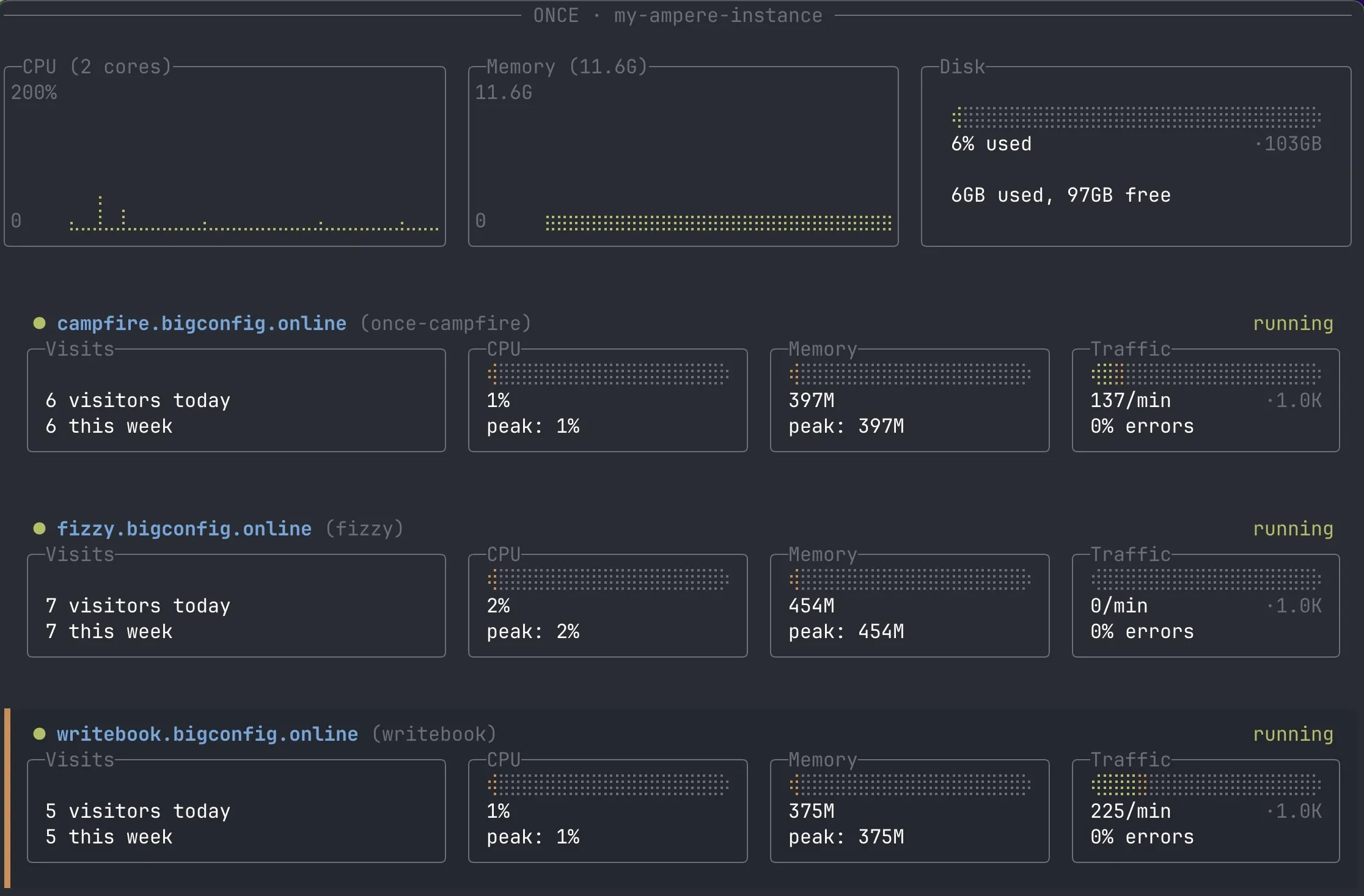
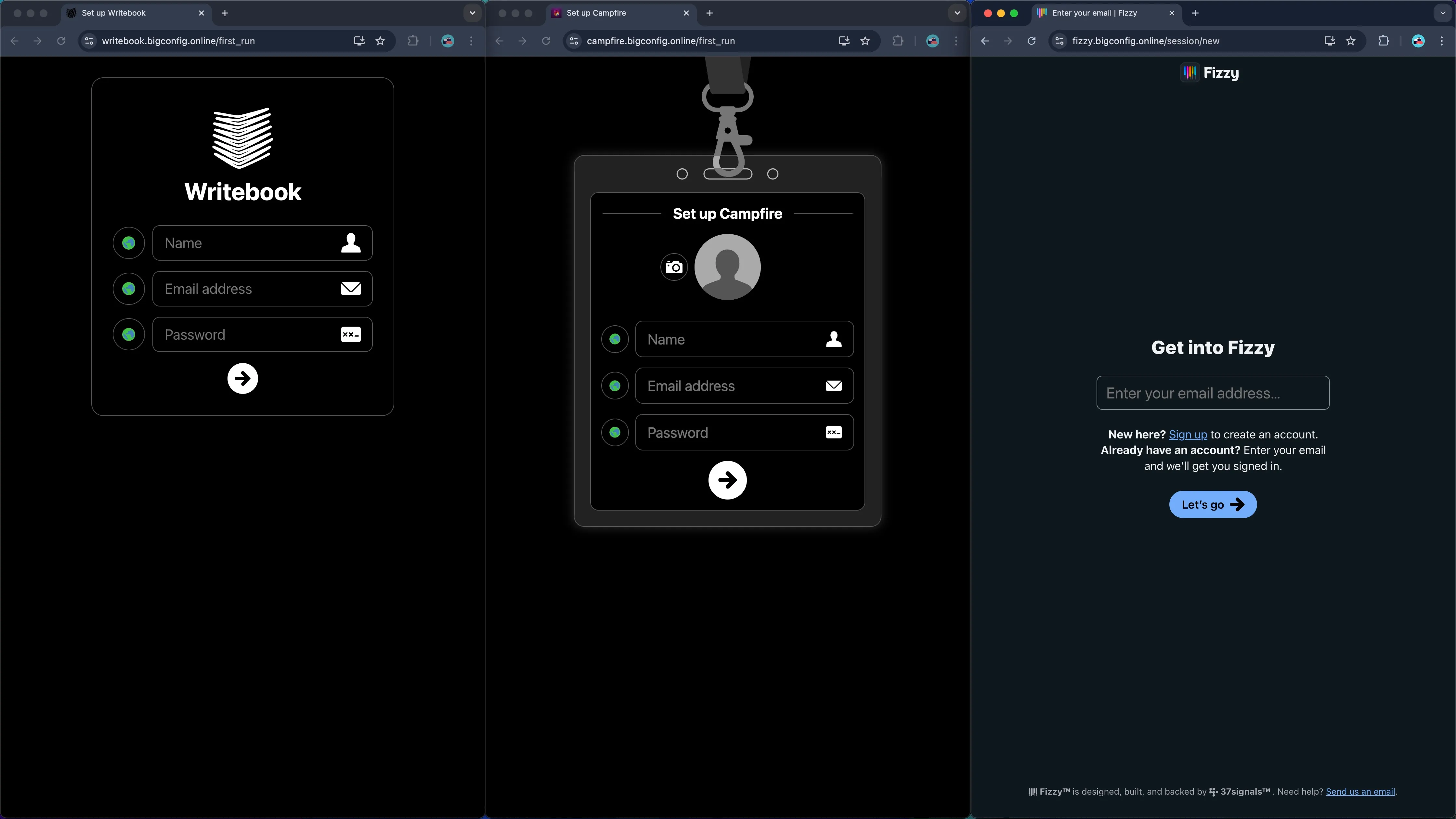
Terminal window sudo once
1. Compute
Section titled “1. Compute”While Oracle and Hetzner are supported out of the box, BigConfig is built for extensibility. Adding a new compute provider is trivial, ensuring you aren’t locked into a single ecosystem.
2. DNS
Section titled “2. DNS”Cloudflare integration is ready to go. Point your domain and let BigConfig handle the records, ensuring your application is reachable as soon as the compute instance is live.
3. SMTP
Section titled “3. SMTP”Transactional email is handled via Resend by default. Like the other modules, swapping this for another SMTP service is simple and straightforward.
The Vision: Dev & Ops in Plain English
Section titled “The Vision: Dev & Ops in Plain English”The roadmap for BigConfig is headed toward a Natural Language Infrastructure. The next milestone is teaching Claude Code to utilize the BigConfig once .
Soon, a vibe coder won’t just write code in English—they will manage their entire production environment through conversation, blurring the line between development and operations entirely.
Current Manual Hurdles
Section titled “Current Manual Hurdles”We’ve automated the heavy lifting, but a few Human-in-the-Loop steps remain—mostly due to provider security and billing requirements. In the age of agentification, these hurdles may not last long:
- Domain Registration: Snagging budget domains (like
.websiteor.onlinefor $0.85) via Namecheap is still a manual checkout process. - Oracle Cloud Setup: Creating an account requires a physical credit card. To unlock the Always Free tier (4 cores, 24 GB RAM), you must manually switch to a Pay-As-You-Go account and generate your API credentials.
- The Namecheap-Cloudflare Bridge: Because Namecheap doesn’t offer an API for smaller accounts, pointing your Namecheap domain to Cloudflare DNS and generating an API token remains a manual task.
- Resend Setup: Account creation and initial API key generation must be done via their web dashboard.
Conclusion
Section titled “Conclusion”The gap between vibe coding a masterpiece and actually shipping it to a live URL is narrowing. By wrapping the fragmented worlds of VPS provisioning, DNS routing, and SMTP configuration into a unified, programmable workflow, BigConfig transforms deployment from a weekend chore into a minor detail. While a few manual gates like billing and domain registration remain—reminders of the physical world we still inhabit—the path toward a fully conversational, Natural Language Infrastructure is clear.
We are rapidly approaching a reality where the Ops in DevOps is as effortless as the Dev. If you’re ready to stop wrestling with dashboards and start shipping at the speed of thought, it’s time to give the BigConfig a spin.
Would you like to have a follow-up on this topic? What are your thoughts? I’d love to hear your experiences.